The team's deep-dive plus fresh research point to one thing: the leading edge of Lifelike's thesis — persistent, emotionally-intelligent AI characters — is the exact stack already running in Austin's world. Not a deck. A fleet.
A living character — memory, voice, presence.
Lifelike's public portfolio is game studios. Its leading edge — the accelerator picks, Kevin Lin's angel checks, his own words — is persistent, emotionally-intelligent characters. The wedge isn't "another companion app." It's the production stack and the Psyche layer for living characters — and it's already shipping.
Twitch was never a video tool — it was parasocial relationship infrastructure at scale. Every venture since has tried to deepen and own that relationship. AI characters are the next layer. Three reasons the fit is real:
Lifelike backs founders building community and emotional connection, and explicitly wants to reform the attention economy — not win it with darker patterns. Living characters that remember you are meaningful engagement, not slot-machine engagement.
He angel-backed Inworld AI (AI NPCs), sits on Baobab Studios' board (AI character animation, w/ Pixar's Ed Catmull), and talks about a "Tamagotchi for the internet age" — a persistent digital being you return to. This is his map.
Most pitches in this space are a Figma file and a waitlist. Here there's a multi-agent companion fleet running 24/7, synthetic performers shipping real work, and a neural-response scoring engine — built, not promised.
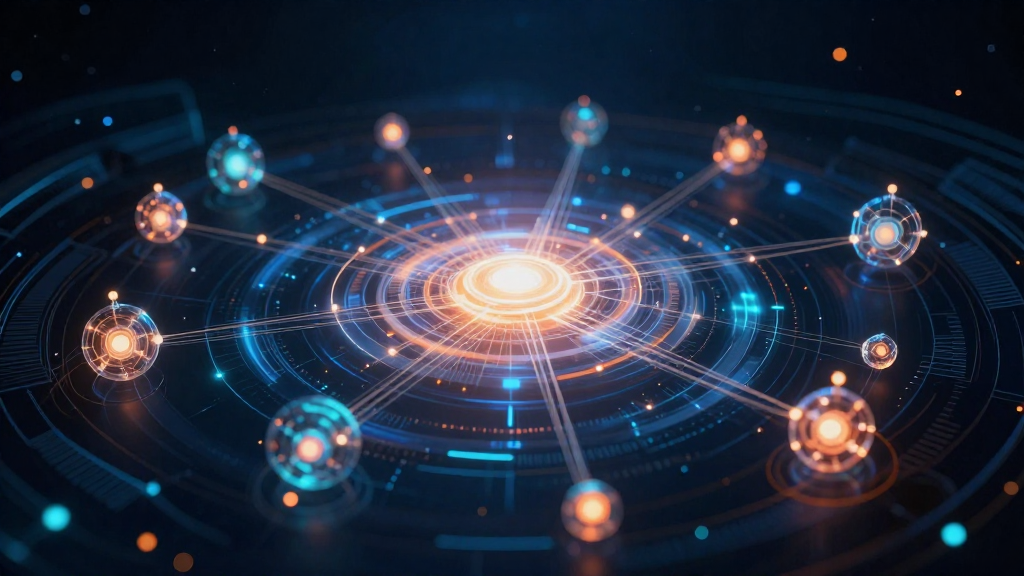
Two domains, one seam
On one side: a portfolio of world-heavy game studios whose worlds are gorgeous but whose characters are scripted and static. On the other: a real, under-capitalized appetite for AI characters that only shows up so far in the accelerator and in angel checks.
The bridge between them is a company that can make living characters — with memory, voice, and a soul — and drop them straight into the worlds Lifelike already owns. That bridge is the opportunity.
GPs: Kevin Lin (Twitch co-founder/COO), Randy Lee (ex-VP Americas, Tencent), Jason Lin. Accelerator arm: ikigai Launchpad via 886 Studios ($100K / 8%).
The portfolio tells the real story. Map it and a pattern jumps out: the fund clusters hard in gaming — but the leading edge (accelerator + Kevin's angel book) glows in AI characters. That zone is empty at fund level. That's the opening.
From Twitch to a Web3 IP studio to a venture fund, one through-line holds: community as product, creators liberated, relationships that are owned and that last. An AI-character pitch lands on his priors when it speaks that language — and clangs when it says "chatbot."
"Re-develop the idea of a product like the Tamagotchi for the internet age — a persistent thing you return to."
— on Metatheory's vision"Games have broken borders … and given us common ground to stand on."
— Medium, 2021Translation for the pitch: not "AI assistant." Yes "a persistent character you have a real, owned relationship with — that replaces hollow engagement with meaningful connection." That's his sentence, handed back to him.
Ironwood, Red Rover, Dead Astronauts, Wolf Haus — world-class environment teams. But their characters are scripted: finite dialogue trees, no memory, no inner life. The single biggest unmet need across every world-heavy studio is the same — NPCs that actually live.
Live Aware Labs (their own portfolio) already sells studios analytics on player behavior. The missing complement is generative: characters that respond, remember, and evolve.
The AI-character bets are real but small and scattered — $100K accelerator checks (EchoTree, Sugar AI, PictureCook) and personal angel positions (Inworld, Baobab). There is no fund-scale platform play in the category yet.
That's not a gap to be timid about — it's a first-mover lane inside a fund that already believes, with a GP who has been narrating this future for a decade.
The company that brings living characters to the studios Lifelike owns — and gives Kevin the synthetic-IP platform he keeps circling — isn't competing for a slot in the portfolio. It's the connective tissue of it.
Most teams pitching AI characters are assembling the pieces. Here the pieces are assembled, integrated, and live — a multi-year, self-funded R&D effort that happens to be exactly the product Lifelike needs.
Multiple persistent AI characters running 24/7 on real messaging channels — each with long-term memory, a written identity / "soul" architecture, distinct voice, and emotional continuity across sessions. The hard problems (persistence, personality stability, memory recall, multi-agent orchestration) are solved and operating, not theoretical.
Virtual artists with their own catalogs — a debut album, singles with music videos, a boutique-label roster — produced end-to-end and released under a real operating LLC. Proof that a synthetic character can author, perform, and hold an audience. This is the Veil thesis, already de-risked.
Image, video, voice, and music generation running on owned hardware — not rented API calls. At the scale of thousands of living NPCs, local inference is the difference between viable unit economics and a business that bleeds out per token. This is a structural cost moat.
TRIBE — an fMRI-derived model that predicts how the human brain responds to media along attention, attraction, and arousal axes. A measurement instrument for "is this actually engaging?" that almost nobody else has. (Full section below.)
Framing matters: this is a running creative-research system that demonstrates the full stack — the company is the work of productizing it for studios and IP. The risk here isn't "can they build it." It's already built.
The team's deep-dive surfaced three directions. Sharpened against the research, they become a single sequenced strategy: lead with the wedge, sell the vision, own the infrastructure.
★ Lead — the wedge
Living-world middlewarePsyche
A drop-in Psyche layer for game studios: NPCs with persistent memory, a real personality model, emergent behavior, and voice — a multi-agent "swarm" that makes a world feel inhabited. Local-inference option keeps cost-per-character sane at scale.
Secondary — the vision
Synthetic IP & performersVeil
A studio + platform for persistent synthetic characters as franchise IP — virtual performers and beings that release real work, hold real audiences, and live across formats. Co-owned and creator-empowering — the "Tamagotchi for the internet age," grown up.
Tertiary — the moat
Agent operations layerForge OS
The orchestration + memory + media substrate that runs the whole fleet, offered as shared infrastructure across the portfolio: multi-agent harness, persistent memory, voice/video pipeline, and engagement QA. The "arms dealer to the ecosystem" play Twitch's own founder will recognize.
Neural-response prediction · attention / attraction / arousal
Kevin wants to reform the attention economy — to replace hollow engagement with meaningful connection. The obvious objection: how would you even measure "meaningful"?
TRIBE is that measurement. An fMRI-derived predictor that scores any piece of media — a character's voice, a scene, a song, an interaction — by how the human brain actually responds, split across three axes:
Is the brain locked in, or drifting?
Does it pull you toward it?
How activating is the moment?
Used today as an internal QA + optimization loop — generate, score, iterate toward what genuinely moves people. For a fund whose thesis is connection, a science-grade engagement instrument isn't a feature. It's a moat.
A $3–5M seed sits squarely in Lifelike's confirmed check range, against a stack that's already built. The fastest warm path runs straight through their own surface area.
Demo Psyche dropping living NPCs into a real game loop. Concrete, immediate, and pointed at studios they already own.
Show the synthetic performers shipping today. Frame it in his words — fanverse, owned relationships, the grown-up Tamagotchi.
The ikigai Launchpad (886 Studios) is a low-friction on-ramp to the partners; or go direct to Kevin / Randy with the Inworld-adjacent framing.
lifelike-diligence-synthesis and lifelike-capital-deepdive contained mostly placeholder stubs that claimed completeness. The ideas were sound and are built on here; the synthesis and research below them are fresh.